
 Image 1 of 3
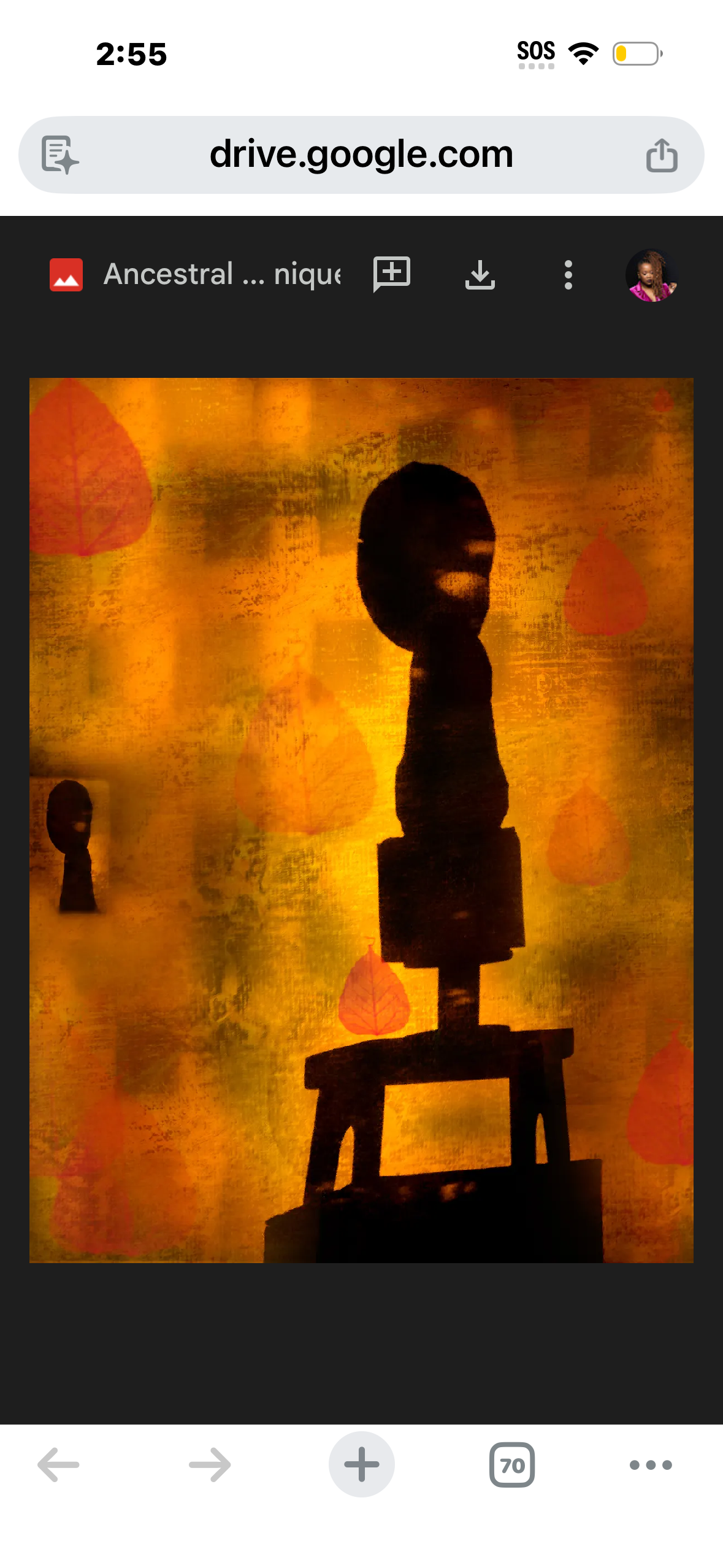 Image 2 of 3
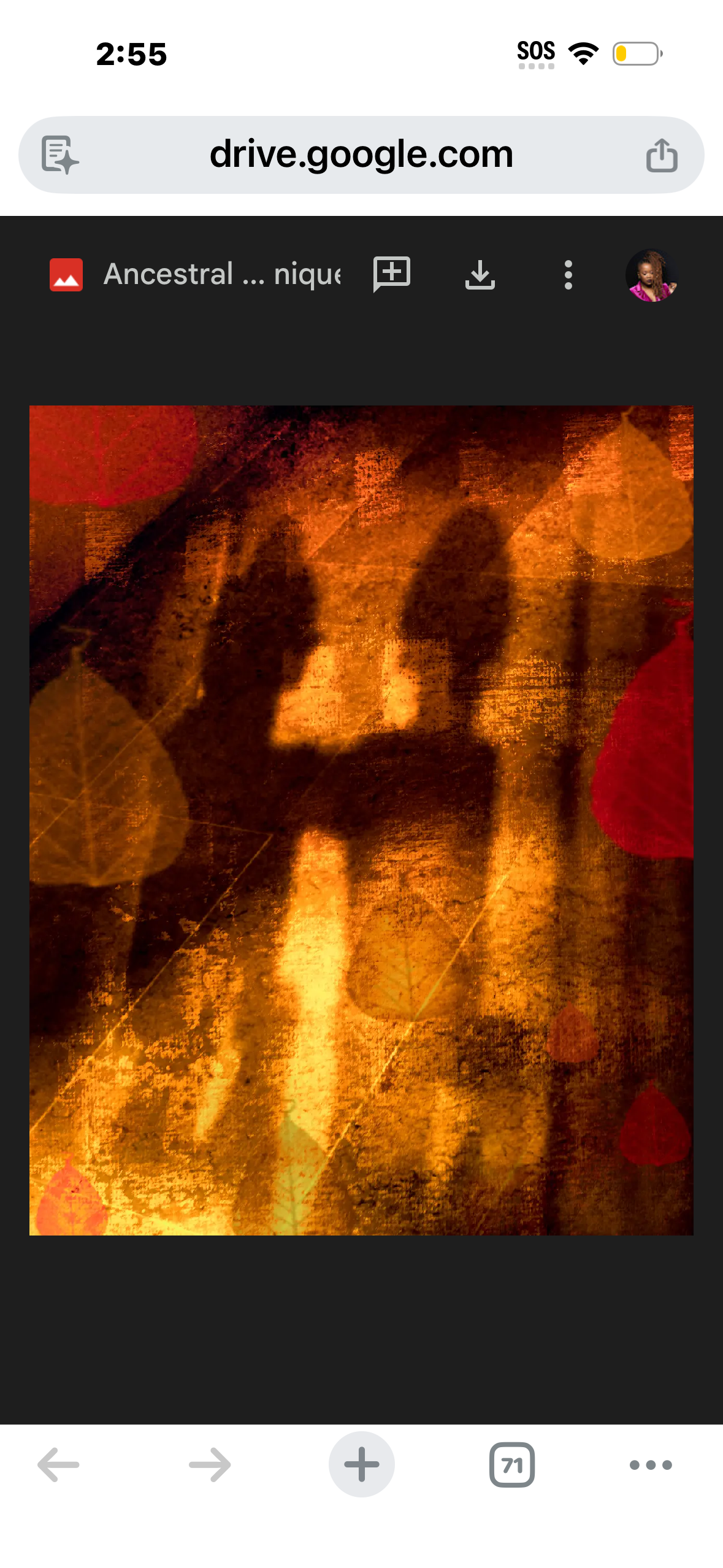 Image 3 of 3
Gene Dominique
@genedominiquephotography
Archival ink jet inks and paper
16x20
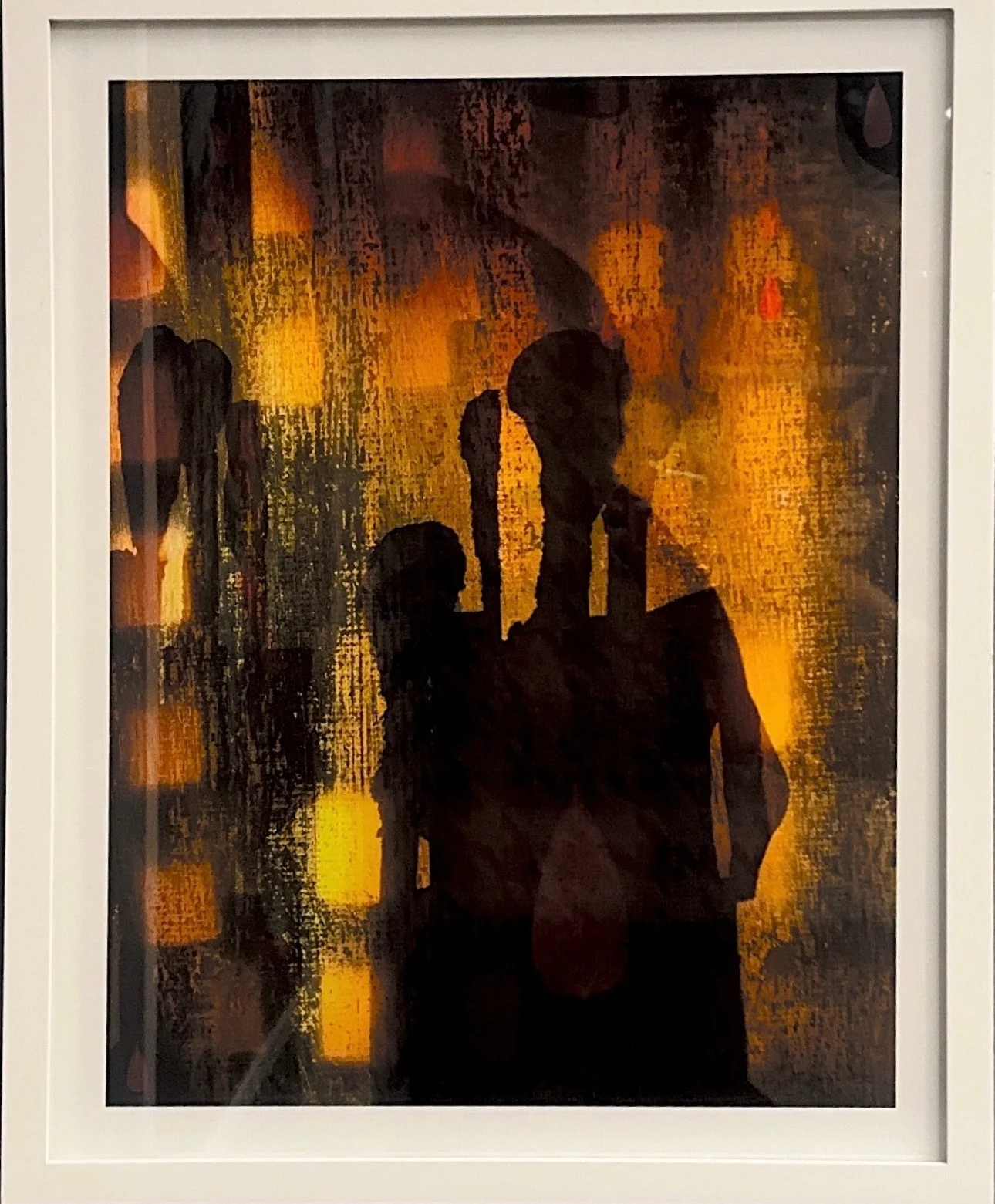
This triptych began with an ending. In 2017, I visited the Musée Dapper in Paris one last time before it closed. It was a place that held a deep connection to West African art and memory. Rather than simply document art objects in the museum, I turned to what remained more quietly present: their shadows. What was left behind, shifting across walls and floors, felt closer to truth than documentation, and more of a way I wanted to remember the sacred space. Ancestral Shadows is built from those moments.
The work is not about preservation in a literal sense, but about resonance—how something continues to exist after it is no longer physically accessible. The photomontages I have created are not fixed forms; they are impressions, fragments, and gestures. They move between presence and absence, suggesting bodies, histories, and cultural memory without fully resolving into them. I use layering, texture, and color to extend that idea. The surfaces feel weathered, as if carrying time within them. The leaves that appear throughout the images are markers of transition—growth, decay, and renewal.
They are reminders that every ending contains a shift into something else. Together, these elements create a space where memory is not static, but alive and evolving. Within the context of Proof of Life, these works speak to persistence in a quieter register. Not through the visibility of the body, but through trace. Through what lingers. Through what refuses to disappear. The shadows stand as evidence—not of what was, but of what continues to shape us, even when unseen. For me, proof of life exists in these subtle continuities. In memory carried forward. In cultural echoes that remain active. In the simple act of noticing what is still here, even after loss. These images ask for a slower kind of looking. Not to identify, but to feel. To recognize that presence does not always announce itself directly. Sometimes, it appears as a shadow—moving, shifting, and still, unmistakably, alive.
Gene Dominique
@genedominiquephotography
Archival ink jet inks and paper
16x20
This triptych began with an ending. In 2017, I visited the Musée Dapper in Paris one last time before it closed. It was a place that held a deep connection to West African art and memory. Rather than simply document art objects in the museum, I turned to what remained more quietly present: their shadows. What was left behind, shifting across walls and floors, felt closer to truth than documentation, and more of a way I wanted to remember the sacred space. Ancestral Shadows is built from those moments.
The work is not about preservation in a literal sense, but about resonance—how something continues to exist after it is no longer physically accessible. The photomontages I have created are not fixed forms; they are impressions, fragments, and gestures. They move between presence and absence, suggesting bodies, histories, and cultural memory without fully resolving into them. I use layering, texture, and color to extend that idea. The surfaces feel weathered, as if carrying time within them. The leaves that appear throughout the images are markers of transition—growth, decay, and renewal.
They are reminders that every ending contains a shift into something else. Together, these elements create a space where memory is not static, but alive and evolving. Within the context of Proof of Life, these works speak to persistence in a quieter register. Not through the visibility of the body, but through trace. Through what lingers. Through what refuses to disappear. The shadows stand as evidence—not of what was, but of what continues to shape us, even when unseen. For me, proof of life exists in these subtle continuities. In memory carried forward. In cultural echoes that remain active. In the simple act of noticing what is still here, even after loss. These images ask for a slower kind of looking. Not to identify, but to feel. To recognize that presence does not always announce itself directly. Sometimes, it appears as a shadow—moving, shifting, and still, unmistakably, alive.